Order planning
Planning MOQ, sampling and production together
Build a realistic schedule around specifications, yarn confirmation, sample approval and order conditions.
For a zip-knit jacket, MOQ, sampling time and bulk lead time are three linked decisions. A useful first schedule shows quantity by style and colour, the material and zipper still to be confirmed, the sample version the buyer will approve, and the event that starts bulk production. A single delivery date hides those dependencies. Ask the factory for a milestone plan for the actual brief before promising a launch date.
On this page · 5 sections
Licheng's published planning references are a 50-piece-per-colour starting point for suitable stock-yarn projects, roughly 15–25 days for a new sample after specifications and yarn are confirmed, and generally 30–45 days for bulk after agreed approvals, materials and order conditions are in place. These are conditional ranges, not a quote or a guaranteed schedule for every yarn, construction, colour, revision or order.
Break the total into decisions the factory can check
“We need 120 jackets” is not a sufficient quantity brief. It could describe one colour of one style, two colours of one style, or several styles each with separate knit structures and zippers. Give the size breakdown for each colour and style, even if some sizes are provisional. Mark which combination is essential and which could change after the first feasibility discussion.
Swipe sideways to read all columns →
| Buyer input | Why it changes the planning question | What to ask for |
|---|---|---|
| Style, construction and quantity by colour | Yarn, machine setup and trim sourcing may differ by style and colour | The applicable MOQ and price basis for each combination |
| Stock shade or brand-specific colour | A custom colour may require a separate approval and small-lot route | Available yarn, reservation terms, colour-development steps and any extra charge |
| Opening type, zipper length and visible trim | A new or substituted component may need sourcing and another sample review | Nominated component, confirmation point and sample scope |
| Size range and sample base size | Fit approval in one size does not settle grading or every size | Which size is sampled, which measurements are agreed and what remains open |
| Required review, testing or documents | An undefined acceptance method cannot be placed on a reliable calendar | Who supplies the method, criteria and actual records |
For suitable stock-yarn work, 50 pieces per colour, with sizes mixed, is a starting reference, subject to the design and materials review. It does not mean that a 50-piece order is feasible at the same price or lead time for every gauge, stitch, embellishment, colour or zipper. For a brand-specific dyed yarn, discuss the dyeing minimum and any small-lot charge separately. The stock-yarn and custom-colour guide explains that branch in more detail.
Put the sample and bulk order on separate lines
A reference photograph, an existing sample in another colour and a newly developed sample are different starting points. Ask what the sample quotation includes: yarn search, knitted swatches, a complete garment, one or more colourways, zipper and branding components, shipping, and any planned revision. If the buyer supplies a zipper or artwork, record its arrival date and whether the factory has approved it for the proposed construction.
The 15–25-day reference is for new sample development after specifications and yarn are confirmed. It is not a countdown from the first email. A missing measurement sheet, unsettled colour, unavailable zipper or delayed artwork can keep that starting event open. The quotation should name the assumed version and completion or dispatch milestone so buyer and factory use the same clock.
Once the sample arrives, the buyer needs time to review fit, front-edge balance, zipper operation, colour and finishing on a named version. Consolidate comments into one response. If a change affects the yarn, zip, knit structure or measurements, ask whether a revised sample is needed and whether the original timing reference still applies. The zip-front sample review gives a separate observation checklist; this schedule guide does not claim that a reference product has passed it.
Define exactly when bulk time begins
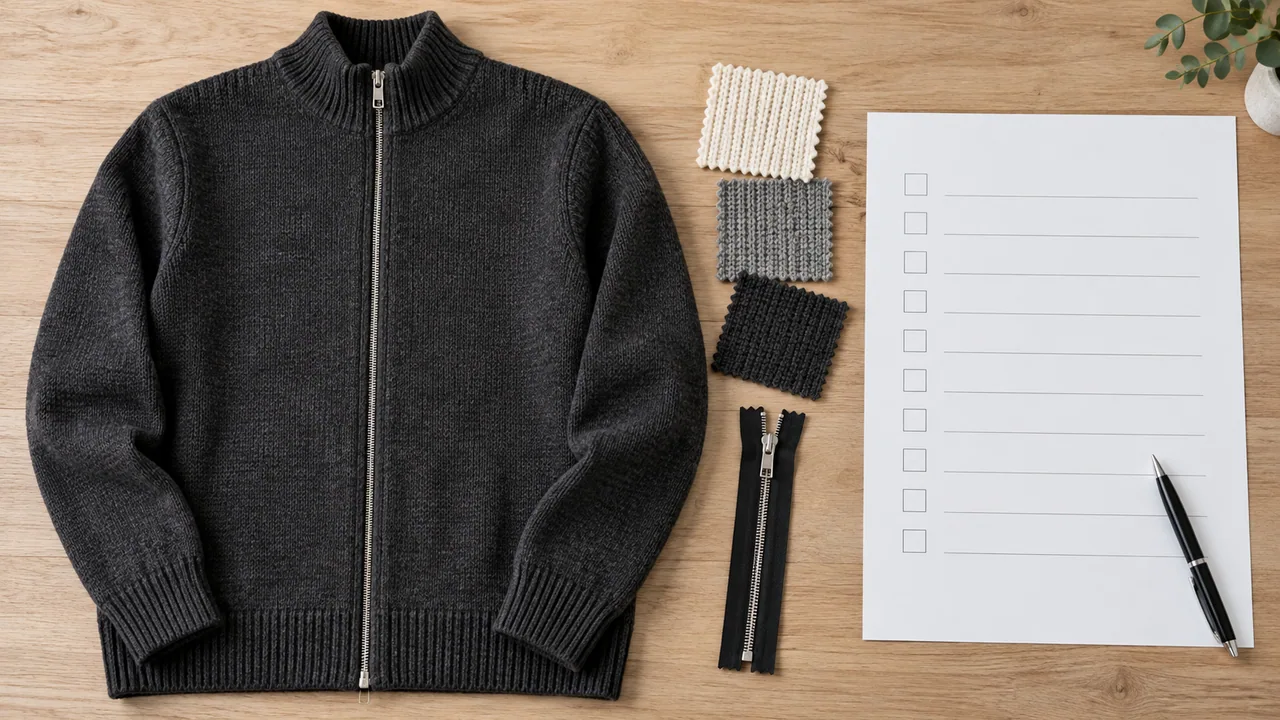
The 30–45-day bulk reference generally begins after the agreed sample approvals, materials and order conditions are in place. Ask the team to spell out those conditions. They may include the final approved sample version, size and colour breakdown, yarn and trim readiness, confirmed artwork, required testing scope, commercial terms and the agreed production slot. A buyer can ask for a tentative window earlier, but should label it tentative until the inputs are confirmed.
Use a milestone sheet rather than adding 15–25 and 30–45 to make an apparent delivery promise. Those ranges have different starting events; between them sit buyer review, possible revision, payment or commercial confirmation and material procurement. Shipping and customs are separate from factory readiness. Holidays, supplier capacity and transport can also shift a particular project. The factory's written order plan should identify which dates are assumptions and which have been accepted.
Swipe sideways to read all columns →
| Milestone | Evidence to keep | Decision before moving on |
|---|---|---|
| Brief accepted for feasibility | Current drawings, base size, quantity by style/colour, intended yarn and zip | What remains unknown or supplier-dependent? |
| Material and component direction confirmed | Yarn/shade and nominated zipper references, availability or sourcing notes | Can sample timing be quoted on these inputs? |
| Named sample dispatched | Sample version, specification, shipment details | What is the buyer's review window? |
| Buyer approval or revision request | One consolidated decision and marked changes | Is another sample or colour check required? |
| Bulk conditions confirmed | Final version, order breakdown, material readiness and agreed terms | Can the bulk start date now be committed? |
| Shipment readiness reviewed | Agreed inspection and documentation records, destination and delivery term | What transport time is outside the factory schedule? |
This is a buyer planning worksheet, not Licheng's universal production procedure. The actual milestones and records must match the project and quotation.
Try one illustrative brief before asking for a date
Suppose a buyer is considering one full-zip knit jacket in two colours, with 50 pieces of each colour across several sizes. This is only an illustrative enquiry, not an accepted order or price. The buyer can identify a base size, attach front and back references, specify whether both colours may use available yarn, and state whether the zipper must match or may contrast. They can then ask for separate answers: whether each 50-piece colour is feasible, what the sample includes, when yarn and zipper references can be confirmed, and which approval starts the bulk window.
If one colour requires custom dyeing, do not silently copy the stock-colour schedule onto it. Ask whether a colour approval and extra fee are needed, whether a physical swatch must be approved before the garment sample, and how that changes the start event. If the zip is later substituted, keep the new component reference and decide which sample observations need repeating. The answer may produce two route options rather than one date; that is useful information for choosing a launch plan.
Send a brief that can receive a useful reply
Include style references, intended market and season, approximate quantity per colour and style, size range, target yarn/hand feel, desired opening and branding, the sample or drawing you already have, and the date by which you need a decision. Distinguish “target launch” from “required ship-ready date”. Ask the factory to return the applicable MOQ, sample scope and fee, assumptions for the sample start, bulk start conditions, material risks and the delivery term used in its estimate.
When an answer arrives, keep its version with the brief. Changes after approval should be logged against that version with their cost and schedule effect. For a project-specific assessment, send the brief through the second-site enquiry form; the team can then confirm what is feasible rather than treating these reference ranges as a promise.