Sample approval
How Should a Brand Approve a Zipper Substitution After Sample Sign-Off?
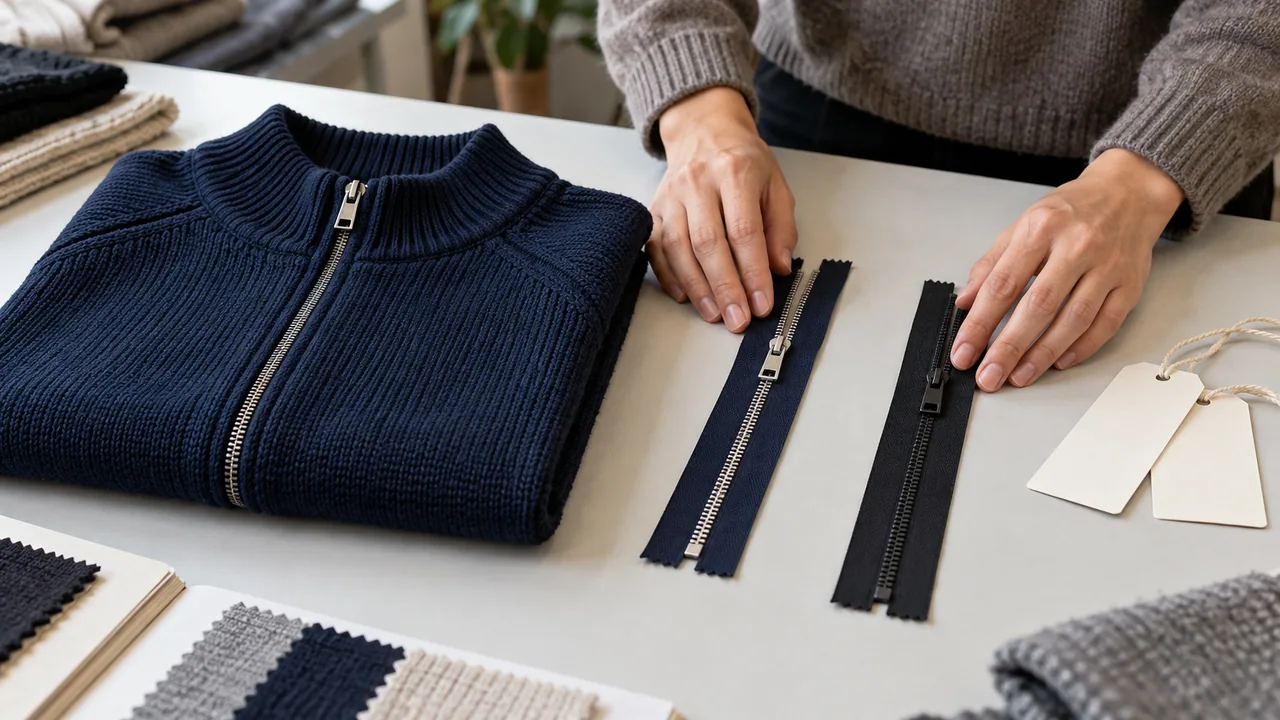
A buyer's change-record worksheet for comparing a proposed zipper replacement with the signed-off knit jacket sample before bulk production.
A brand signs off a zip-front knit jacket sample. Before bulk production, the nominated trim is unavailable in the approved colour, a supplier offers a different slider, or a new zipper assembly is proposed. The question is no longer how to choose an opening for the original design. It is whether this exact replacement can take the place of the component on the signed-off garment.
On this page · 3 sections
A photograph of two similar black zippers cannot settle that question. The buyer needs a named before-and-after record, a review proportionate to the change, and one clear decision about which version now controls production. The worksheet below is a buyer proposal, not a claim that any Licheng reference style has undergone a substitution or that the factory uses this as its standard procedure.
Keep the signed-off version visible
Begin with the actual approved sample ID and date. Attach its front drawing, base size, zipper supplier and part reference, colour or finish reference, opening type, nominated length and the supplier's measurement convention. If the garment team did not retain a complete trim record, mark the missing field as unverified; do not reconstruct it from a photograph.
Describe the proposed replacement in a second column using its own supplier designation. State why it is being proposed: supply, colour, cost, function or another project reason. Mark whether the proposal changes only the visual finish, a slider or pull, the chain and tape, the end arrangement, the dimension, or the way the zip is attached to the knit. A proposal can change more than one of these at once.
Decide what evidence the change needs
The table is a way to ask for evidence, not a universal pass/fail rule. The nominated component supplier and the actual garment construction decide the applicable checks.
Swipe sideways to read all columns →
| Proposed difference from the signed-off sample | First question | Evidence to agree for this project |
|---|---|---|
| Colour or finish on an otherwise identical identified assembly | Has the supplier confirmed that the construction and parts are unchanged? | Part confirmation and comparison with the approved colour or finish reference under agreed viewing conditions. |
| Pull or slider change | Is the replacement compatible with the named chain and does it preserve the intended handling? | Supplier's compatible-part reference and operation on the assembled garment. |
| Supplier, end type or nominal length change | Do the nominated supplier's dimension endpoints and the garment's upper/lower positions still agree? | Both component drawings and a revised physical sample if placement or operation may change. |
| Tape, chain size or attachment construction change | Does the complete knitted front still behave as intended? | Revised assembled sample; compare the affected front edge, fit and opening under the agreed conditions. |
Coats' zipper FAQ advises matching slider and chain by supplier and size; visual similarity is not proof of compatibility. YKK's zipper instruction manual illustrates different measurement endpoints for closed-end, open-end and two-way open arrangements. These are supplier references, not evidence that Licheng has selected either brand or that their specifications apply to another supplier's part. Ask the actual supplier for its matching and dimensional information.
An “equivalent” replacement is still a proposal until someone has checked the exact differences. If the supplier changes the whole assembly, do not treat it as a pull-only change because the visible pull looks familiar. If the part change also requires a different facing, stitch position or hem treatment, record both the trim and garment-construction changes on the same ticket.
Record the review and the decision separately
For a changed assembly, compare the revised garment with the signed-off one using the same base size. Record only the observations relevant to the proposed difference: for example, whether the new lower connection reaches the intended hem mark, whether the slider clears the facing, or whether the tape and knitted edge sit together as intended. The broader flat, worn and care views are covered in the zip-front sample review guide; this change ticket should identify which of those checks were repeated and why. Do not copy an old care or operation result into the new version without deciding whether it still applies.
Then capture five fields on one approval ticket:
- Baseline: approved garment and zipper revision, with the evidence that identified them.
- Delta: proposed supplier parts, dimensions, colour, attachment and reason for change, with unknowns marked.
- Review: supplier confirmations, actual revised sample ID, observations and any agreed test results; distinguish requested checks from completed ones.
- Decision: accepted, rejected or still proposed; name the brand and factory decision contacts and the date. An unanswered question is not approval.
- Production effect: which version controls the bulk order, and any revised cost, material availability, schedule or additional sample decision that the parties have actually agreed.
If the replacement is accepted, attach its ticket to the current tech pack and purchase-order version so the sample, trim specification and production instruction refer to the same garment. If it remains proposed, keep the signed-off version as the reference while the team resolves the gap. For a live project, send the existing sample reference and proposed change in a project brief; sourcing and review conditions are confirmed for that project.