Zip specification
How Should Zipper Tape and Knitted Stretch Be Reviewed Together?
A buyer-facing sample review method for comparing zip tape, knitted panels and front-edge behaviour without assuming a particular hardware supplier.
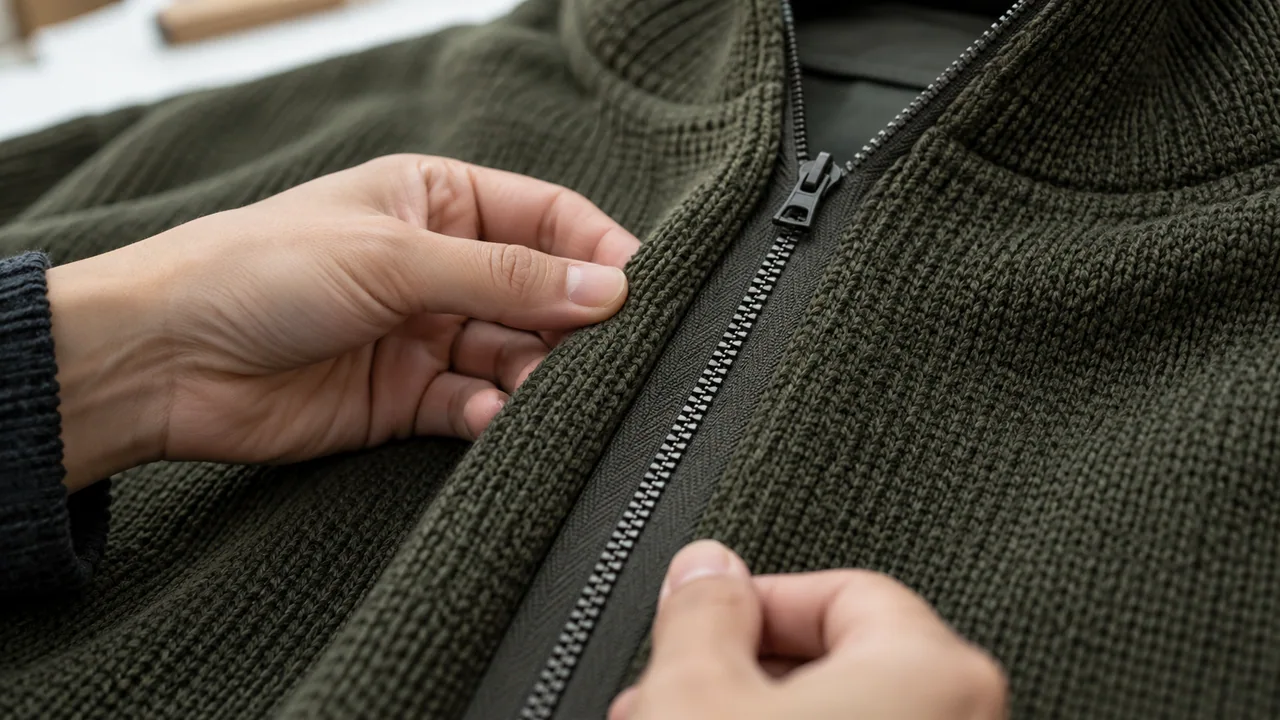
A front zip joins two materials that may respond differently to movement: the knitted garment panel and the zipper assembly. A sample can look straight on a table, yet the front edge can change when the garment is worn, opened, closed or cared for. The useful question for a buyer is not simply whether a tape is described as “stretch.” It is which direction needs to move, how the complete front is assembled, and what the finished sample does.
On this page · 4 sections
This guide is a way to write a review brief. It does not prescribe a tape for every knit or claim that any of our catalogue references uses a particular zipper brand.
Describe the movement before choosing the tape
Start with the garment. Is it a relaxed cardigan, a close-fitting mid-layer or a heavier jacket? Note where the knit stretches during wear: across the chest, along the front edge, or both. Then mark the intended opening length, the collar and hem endpoints, and whether the zip is visible or covered by a placket.
“Stretch tape” is not one universal construction. YKK's Elastic Tape Zipper page distinguishes vertical-stretch ELT/ELV tape from horizontal-stretch ELW tape; it also explains that the tape stretches, while the zipper elements do not. Its Flexible Knit Tape Zipper page describes a soft, stretchable tape for curved applications, but notes that its chain crosswise strength is lower than a regular coil zipper's. These supplier examples show why a catalogue label is a starting point for component review, not approval for a finished garment. Availability and suitability of any named product need separate supplier confirmation.
For a buyer brief, request a proposed zipper specification and ask what problem it is meant to solve. If a supplier suggests a stretch option, ask about its stretch direction, opening type, size, load and care limitations. If it suggests a conventional tape, ask how the knitted edge and any stabilising construction will be handled. The answer should address the actual garment, not merely name a component family.
Compare tape direction and attachment on the same knit
Keep the garment question narrow: does a proposed tape and attachment let this particular knitted front behave as intended? If two options can be sampled, record the same base size, knitted panel, opening length and placket drawing for both. Label the exact tape and zipper assembly in each option. This is a proposed buyer comparison, not a claim that Licheng has performed it on any catalogue style.
Swipe sideways to read all columns →
| Component question | Evidence to request for each proposal | Why it matters to this knit front |
|---|---|---|
| Direction of movement | Supplier's stated lengthwise and crosswise tape behaviour; the knit panel's intended movement direction | A tape that extends along its length does not automatically extend across its width. |
| End and assembly type | The proposed open-end or closed-end arrangement, size and any supplier use restrictions | A soft tape description alone does not prove it fits a full front rather than a shorter opening. |
| Attachment | Stitch position, seam allowance, facing or stabilising layer and pressing plan | Different insertion methods can change the front even if the same tape is used. |
| Project evidence | Assembled sample ID, front-edge observation, agreed care method if relevant, and unresolved questions | A supplier specification cannot establish the finished garment's appearance or performance. |
Ask the supplier to explain what the proposed tape is intended to solve. A tape specified to stretch lengthwise may address a different movement from a flexible knit tape intended for curved attachment. YKK's two examples have their own construction and stated limits; availability, end type, strength and care suitability must be checked for the chosen part and project.
Separate a tape change from a sewing change
On an assembled sample, mark the same section of front edge before comparing options. Note whether one side appears shorter, a wave sits beside the stitching, or the placket changes shape as the knit moves. Record the exact tape, facing, stabilising layer and stitch position used on each version so a difference in appearance is not assigned to the tape without evidence.
If an option uses a different tape and a different facing, stitch position or stabilising layer, record it as a different assembled construction. A better-looking front cannot then be attributed to the tape alone. Coats' garment problem-solving guidance treats puckering and stretch as issues to diagnose with the actual fabric and sewing conditions. Ask the sample team to identify what changed before deciding which version to develop further.
The general flat, worn, open and post-care approval views are already covered in our zip-front sample review checklist. For this tape decision, add the component's stated movement direction, its position against the knit and the exact attachment method to that ordinary sample record. If care behaviour is relevant, agree the method and limits for the real material combination; do not carry a result from one tape and yarn combination over to another.
Close the tape decision with a component record
Before signing off the chosen construction, identify:
- The knitted panel and the direction in which it is expected to extend during wear.
- The selected zipper assembly, supplier reference, end type and the tape's stated directional behaviour and limitations.
- The approved stitch line, facing or stabilising construction on the physical sample version.
- The observed front-edge behaviour under the agreed conditions, and any care or operation check actually performed.
- The person approving that combination and which changes would require another review.
“Stretch zip” alone leaves too much undecided. The record should tell a supplier which component plus garment construction was reviewed, and which choices still affect cost, sourcing or lead time. To discuss a zip-knit project, send your intended opening, fit and reference images in a project brief. Final components and sample checks are agreed for the actual project.