Yarn and colour
Stock yarn or a custom colour: planning your first order
Compare colour availability, approval steps and small-lot conditions before fixing a launch date.
For a first zip-knit order, the fastest colour route is not always the colour that looks closest on a screen. The buyer first needs to confirm the yarn quality and construction, then compare an available shade with the cost and approval work of developing a brand-specific one. Treat both routes as project decisions: neither a catalogue photo nor an earlier sample proves today's stock or a future dye-lot match.
On this page · 6 sections
- Start with one garment and a realistic colour breakdown
- Check the stock-yarn route first when flexibility matters
- Define what “custom colour” means for this order
- Review the zipper and other visible components together
- Compare the two routes on the same decision sheet
- Send a brief that can receive a useful answer
Start with one garment and a realistic colour breakdown
Send the intended style, fibre direction, approximate quantity per colour and style, and size range together. A total of 200 pieces can mean one colour in several sizes, four colours of 50 pieces, or a mixed order of two styles. Those are different material and setup questions. Name the colours that are essential to the collection and the shades for which a close alternative could be acceptable.
If a reference garment is available, photograph it in neutral light and identify which parts must match: the main knitted body, rib, collar, zipper tape, puller, pocket trim or labels. A photographic reference helps the first discussion. It cannot establish a production colour standard on its own, because displays, lighting and fibre surfaces change the apparent shade.
Check the stock-yarn route first when flexibility matters
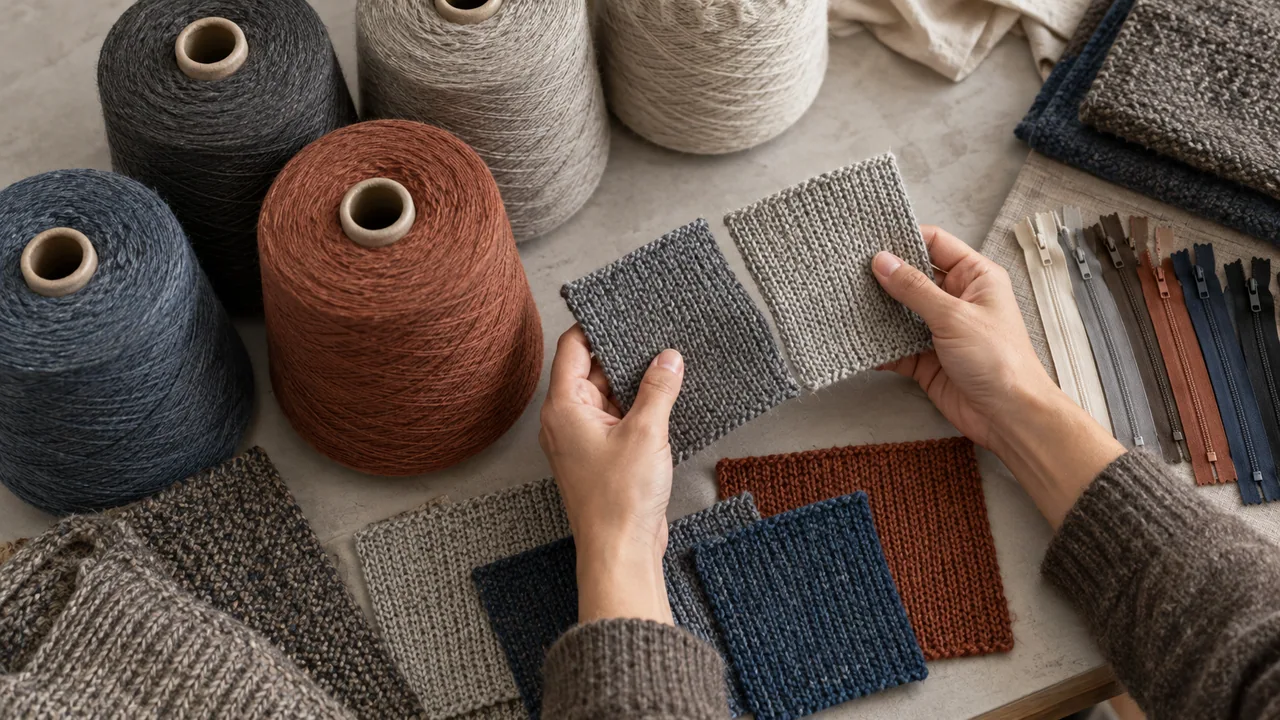
Ask the factory to identify the yarn quality and shades it can actually check for the project. The question is not simply “do you have beige?” A warmer beige in a smooth knit can read differently from the same labelled shade in a textured rib. Request a physical yarn or knitted swatch when colour accuracy matters, and confirm whether enough of the same quality can be reserved for the sample and proposed bulk quantity.
For a brand willing to choose a close shade, a suitable stock colour may avoid a separate custom-dye approval. That does not mean it is reserved, that every construction is possible, or that a 50-piece order automatically meets the conditions. 50 pieces per colour. Plain and striped styles using the same yarn and colour may be combined; sizes may be mixed. Jacquard/intarsia: 50 pieces per pattern, with no combining different patterns. Ask for the applicable quantity and price in the actual quotation.
Stock yarn can be useful for a first capsule or a time-sensitive sample review. It can also be the wrong choice if the brand's core colour must match a physical standard or a coordinated range of products. Make that trade-off explicit before choosing the sample route.
Define what “custom colour” means for this order
If the shade is fixed, send an agreed physical colour reference and identify the intended yarn. Then ask which mill and dyeing route are feasible, what the minimum dye lot is, how many approval rounds are included, and who approves the final shade. A dye approval should name the actual material and reference, not only a colour name such as “forest green”.
For planning only, Licheng's currently published guidance says that a suitable 50-piece-per-colour project may need a small-lot dyeing charge and roughly 7–15 additional days for colour development. At 100–300 pieces per colour, a mill's normal dye-lot conditions may apply. These figures are conditional reference ranges, not a promise of availability, price, match or schedule for a particular yarn. Ask the team to quote the route that applies to the selected material and quantity.
Separate the colour-development period from knitting, sample review and bulk lead time. If a colour approval changes after the sample, ask whether another swatch or sample is needed and when the production clock can start. The written timetable should show these decisions as milestones rather than folding them into one unexplained delivery date.
Review the zipper and other visible components together
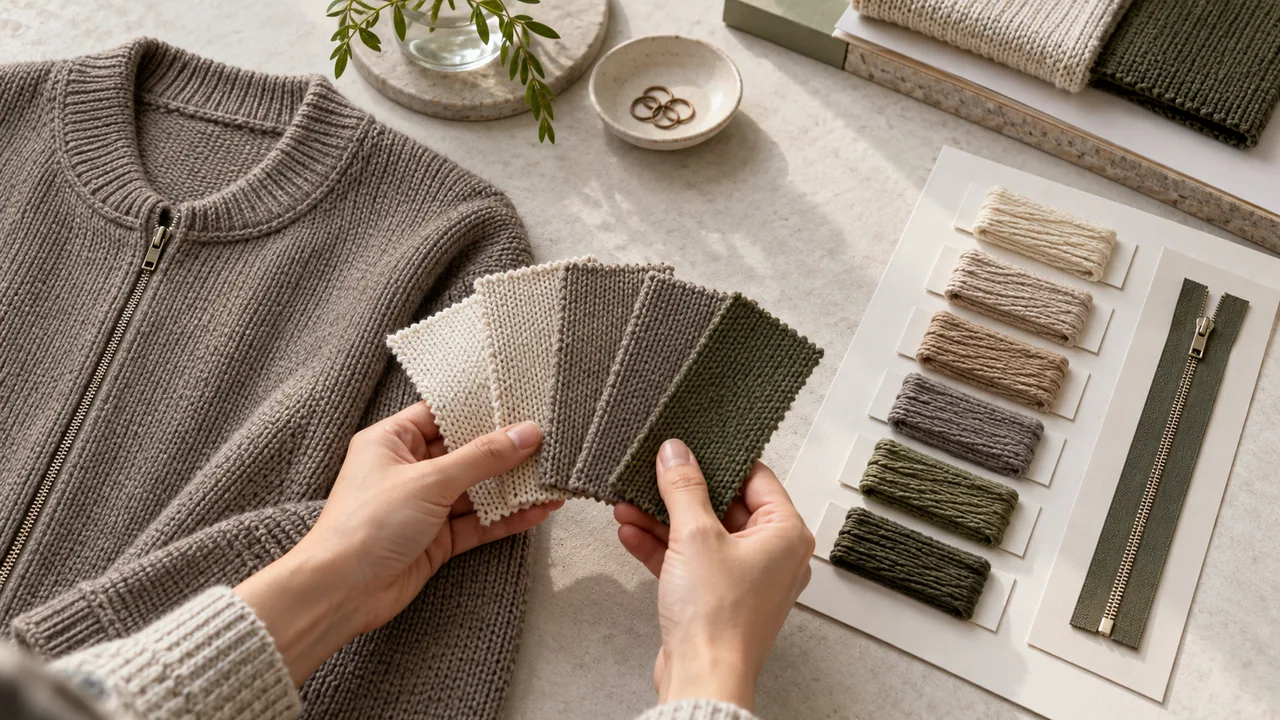
The yarn may be approved while the zip front still looks wrong. Zipper tape can sit beside knitted fabric at the most visible line of the garment; a nominal colour match may look too dark, too warm or too shiny once the pieces are assembled. For a two-way, open-end or pocket zip, identify each visible component separately. If the brand accepts contrast, specify the intended contrast instead of leaving a supplier to guess.
Ask for a comparison under the agreed light and on the actual knit direction when possible. Keep the approved swatch, trim reference, sample version and photograph linked to one record. An AI concept image or an isolated digital swatch can help communicate intent, but it is not proof of a physical colour match or a tested garment.
Compare the two routes on the same decision sheet
Record the following for each option before signing off a sample:
- Yarn quality and composition under discussion, with any substitutions clearly named.
- Physical colour reference, proposed shade and the level of match required.
- Quantity by style, colour and size; reservation or dye-lot conditions.
- Sample charge, custom-dye charge if applicable, and what one approval round includes.
- The date by which the buyer must approve the shade and any visible trim.
- The start point for the quoted production window and the effect of revisions.
- How a repeat order will be checked against a new yarn or dye lot.
A buyer can then make a deliberate choice: accept an available shade, pay for a custom route, change quantity, or defer that colour. The decision should be visible in the approved sample and final order record. Do not rely on a verbal “same as last time” if the yarn lot or trim source changes.
Send a brief that can receive a useful answer
An effective first message might say: “We are developing one full-zip knit style in two colours, around 60 pieces per colour, with a physical standard for the main shade. A close stock option may be acceptable for the second colour. Please compare the feasible yarn and approval routes, any small-lot charge, and the point at which the sample and bulk timelines begin.” Attach only the relevant reference, mark any confidential artwork, and state the delivery destination.
Licheng can then discuss the materials and order conditions for that project. Confirmed prices, lead times and shade standards belong in the quotation and sample approval record, not in a generic article or an image caption.