Yarn and colour
What Should a Supplier Confirm Before Matching Zip Tape to Dyed Yarn?
A buyer's component-level colour brief for a zip-knit jacket: agree the knitted reference, separate tape from elements and slider, and record which match has actually been approved.
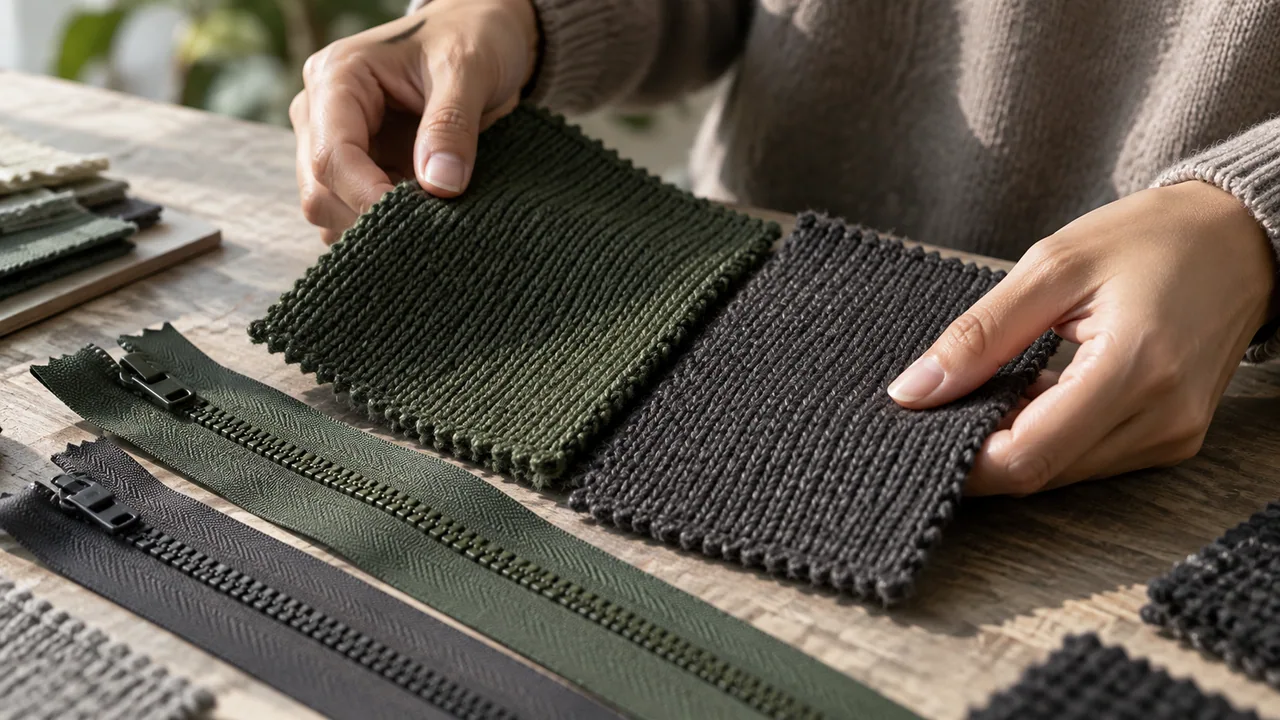
A brand approves a dyed yarn for a zip-knit jacket and asks for a matching front zip. That request sounds like one colour decision, but the visible front can contain knitted fabric, zipper tape, elements, a slider and a pull. Each may have a different material, finish or supplier colour range. A yarn approval therefore does not automatically approve the complete zipper.
On this page · 5 sections
The useful brief is specific: which component should match which knitted reference, under which agreed viewing conditions, and what evidence will close the decision? This worksheet helps a buyer ask those questions before treating a colour photograph or a supplier colour name as an approval. It does not prescribe a universal tolerance or claim that any Licheng reference style has been colour matched in this way.
Name the knitted reference first
Give the supplier one identified colour target. Record the yarn or knitted-panel version, whether it is an initial lab sample or an approved production reference, and the finish or surface that the buyer expects to see next to the zip. If the garment combines a ribbed collar, a plain front panel and a contrasting pocket, identify which area controls the requested match. A colour code or screen image can introduce the direction, but the buyer should say what physical reference will govern the project decision.
Also specify whether “match” means a close visual blend, an intentional tonal contrast or a deliberately different trim colour. A supplier cannot resolve an unstated design choice by selecting the closest item on a card. The brand should record who may approve a change from matching to contrast if the requested tape is unavailable.
Ask about each visible part of the zip
Describe the intended opening and the visible parts before asking for a shade. On a covered zip, little tape may show; on an exposed full front, two long tape edges can dominate the appearance. The request should identify tape, elements, slider and pull separately, including any coating or metallic finish. Do not infer from one matching tape swatch that the elements and slider will match it.
YKK's zipper-colour guidance describes visible differences both between a garment and its zipper and among the tape, elements and slider under different lighting. That is a supplier example, not an identification of the parts in any Licheng reference style. Ask the actual nominated zipper supplier for its component references and colour options.
Swipe sideways to read all columns →
| Buyer field | What to record before approval |
|---|---|
| Knitted target | Identified physical yarn or knitted panel, garment area, version and finish. |
| Tape | Nominated zipper assembly and tape colour reference; whether it is a stocked option, a proposed custom match or still unconfirmed. |
| Elements | Their material, colour or finish reference, and whether the selected tape option includes that element finish. |
| Slider and pull | Their separate finish references and whether a coating or metal appearance is intended to contrast. |
| Decision | Viewing conditions, physical samples reviewed, approver, version and unresolved differences. |
Check whether the requested option is actually available
“Dye to match” is not a blanket promise across every zipper family. Availability can depend on the supplier, tape construction, colour, end arrangement and order conditions. Ask for a named supplier part and confirmation of the proposed tape shade before treating the option as quotable or buildable. If the exact match is unavailable, ask for the nearest approved stock shade, a revised trim design or a different nominated assembly, and show the cost and schedule consequences as project questions rather than fixed claims.
Supplier catalogues illustrate why this check matters. One YKK decorative tape listing names 12 standard colours for that part, while another YKK tape construction says its tape can be dyed to match fabric. These different product options cannot establish availability, minimum quantity or delivery time for a Licheng project. The selected supplier must answer those questions for the actual part.
Review physical parts together
Arrange the proposed zipper or identified component samples beside the approved knitted reference. Agree the viewing light and note any setting where a difference matters to the brand. YKK's guidance explains that two materials may appear close under one light and separate under another; its specific D65 advice applies to its own standard colour card. A buyer using another supplier should agree that supplier's comparison method rather than copying a YKK card procedure as a universal rule.
Photographs can help distributed teams identify which version was reviewed, but a phone image alone cannot settle a difficult physical colour decision. Record the reference ID, zipper part ID, sample date, viewing conditions and the approver's written comment. If the brand accepts a tonal difference, write that decision down; do not relabel it as an exact match. If the target yarn, zipper assembly or finish changes later, identify which colour approval must be revisited.
Close the brief without overstating the result
Before a quote or sample approval is treated as final, ask for five answers:
- Which knitted reference and garment area control the trim-colour decision?
- Which exact tape, elements, slider and pull are proposed, and what remains unconfirmed by the supplier?
- Is the design intent a close match, an accepted tonal variation or a contrast?
- Which physical versions were compared, under what agreed viewing conditions, and by whom?
- If a part is substituted, who approves the revised component and the effect on price or timing?
This colour record belongs beside the opening type and construction brief; it does not replace a review of how the zipper behaves on the knitted front. To discuss an actual zip-knit project, send the intended garment, colour reference and trim preference in a project brief. Component options and approvals are confirmed for the project.