Sample review
How Can a Brand Review a Zip-Knit Sample Remotely Without Mixing Up the Evidence?
A buyer's evidence-request and decision worksheet for reviewing one identified zip-front knit sample through photos, continuous video and a measurement record.
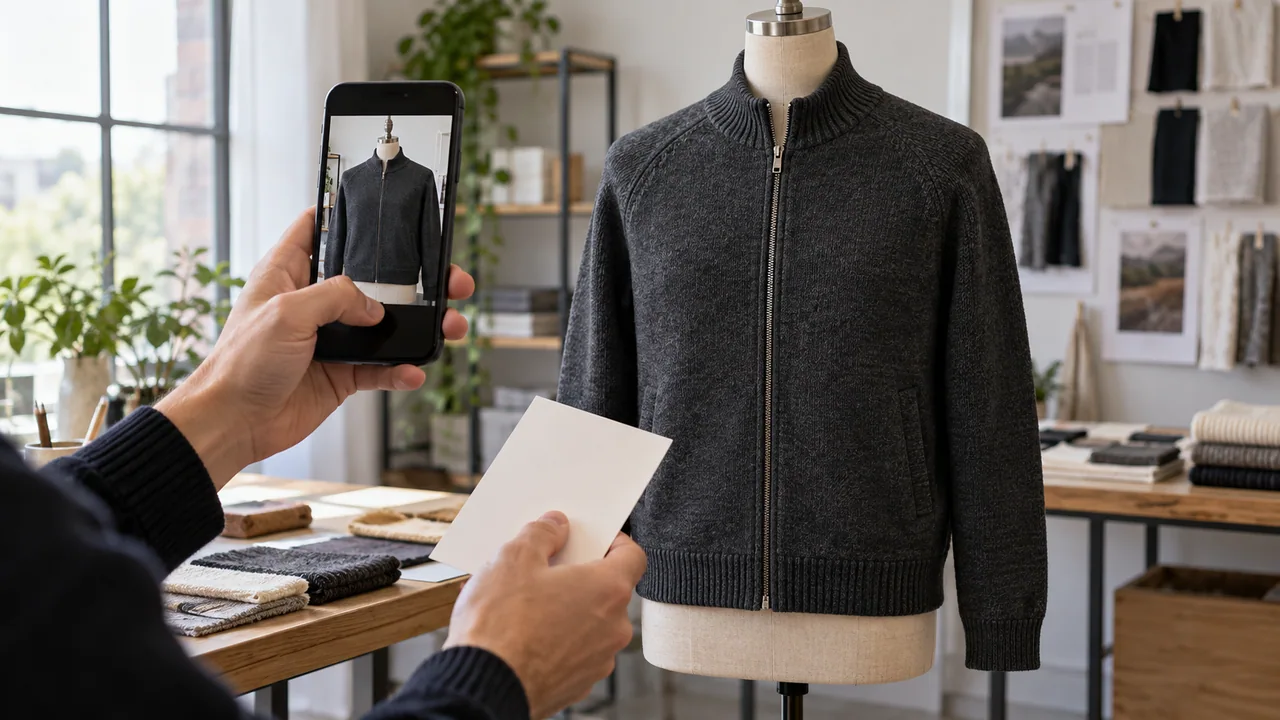
Your design, sourcing and merchandising colleagues may sit in different countries while the sample remains with the maker. A front photograph helps them discuss shape, but it does not show whether the zipper can be started at the hem, whether the two knitted front edges remain aligned through an opening cycle, or whether a measurement sheet belongs to the garment in the video. The immediate task is to assemble a reviewable record for one identified physical sample. Whether that record is enough for final approval is a separate project decision.
On this page · 4 sections
The general zip-front sample checklist covers what to inspect on the garment. This guide is about transferring the evidence to a remote buyer and recording the scope of the buyer's decision. The suggested package below is a buyer worksheet; it is not a statement that Licheng currently runs a fixed remote inspection or testing service.
Name the garment before opening the files
Ask for a cover sheet with the style or project reference, sample revision, size, colour reference, date, nominated zipper or trim reference, and the name of the person who prepared the files. Put the same sample ID in the frame at the start of each requested video and beside the garment in overview photographs. A paper label can establish what the sender says was filmed; it is not independent proof of fibre composition or test results.
Request a simple file list: file name, capture date, sample ID, view or action, and whether a newer sample has superseded this one. Keep the original files if possible so reviewers can zoom in and see their sequence. If a revised collar photograph arrives later, ask whether it shows the same physical garment after alteration or a new sample. Do not quietly combine its collar with the original body's measurements and call the result one approved version.
Request a small set of views with a defined purpose
The aim is to answer a specific question with each file, rather than collect the largest possible gallery.
For a full open-end zip, ask the operator to show the lower connection before joining it, close to the top, open to the bottom and separate it again in one take. For a closed-end or other nominated opening, ask for the corresponding complete action. The operator should show the knit front lying naturally before and after; pulling the fabric flat for the camera can hide the condition under discussion. If the clip cuts between the first and final positions, ask for the missing action rather than infer that it worked. This is a request for visible operation, not a standardized performance test.
If an issue appears only while worn, ask for a wearer or dress form with the base size, relevant body measurements or form dimensions, and camera angle recorded. A worn view without that context may help identify a question, but it cannot establish the intended fit across the size range. Obtain permission before using a person's image or sharing any files beyond the project team.
Keep numbers tied to method and version
The measurement sheet should state the garment state and points used: for example, laid flat after the agreed conditioning, with the named zip position and no intentional stretch. If the buyer sees an apparent difference, request a close image of the specific tape and measurement points on that same sample, then ask which reading is the recorded value. A ruler in a photograph is useful for locating a question; camera angle, garment tension and an undefined endpoint can make the apparent number misleading.
Ask the project team to agree the measurement method, tolerance and any wash or care review separately. A photograph of a clean garment cannot prove its fibre content, hand feel, colour under the buyer's viewing conditions, laundering response or an unperformed laboratory test. Use a physical sample and applicable project records when those decisions matter. A remote evidence package can narrow the issues before shipping; it should not silently convert an unobserved property into an approved one.
Return a decision, not a list of reactions
Use one short review sheet linked to the exact sample revision. For each observation, record the file and time stamp, the question, the requested next evidence or change, and who will decide it. Then give the package one of three explicit outcomes:
- More evidence requested: the buyer cannot judge an identified point from the current package; the sample remains under review.
- Conditional discussion: visible points can proceed for quotation or a next sample, while named physical or test checks remain open. This is not final production approval.
- Remote evidence accepted for the next step: identify the sample revision, visible points accepted for discussion and every outstanding physical or test check. Acceptance of the file package does not authorize bulk production.
If the maker changes the garment after the review, give it a new revision and make a new evidence list. The buyer can then compare the changed points against the earlier record without confusing a new zip with an old fit photograph. Before any bulk decision, obtain approval of the physical sample under the agreed project process. Both sides should be able to answer: which physical sample and specification version controls, which observations were actually checked, and which points remain open?
For a real project, send your existing sample ID, questions and proposed review conditions. The available evidence, sample shipment and acceptance route should be agreed for that project.