Visual evidence
What Can a Factory Photo Tell a Buyer About One Zip-Knit Style?
A buyer's evidence map for separating workshop context, process views, identified samples and style-specific quality records.
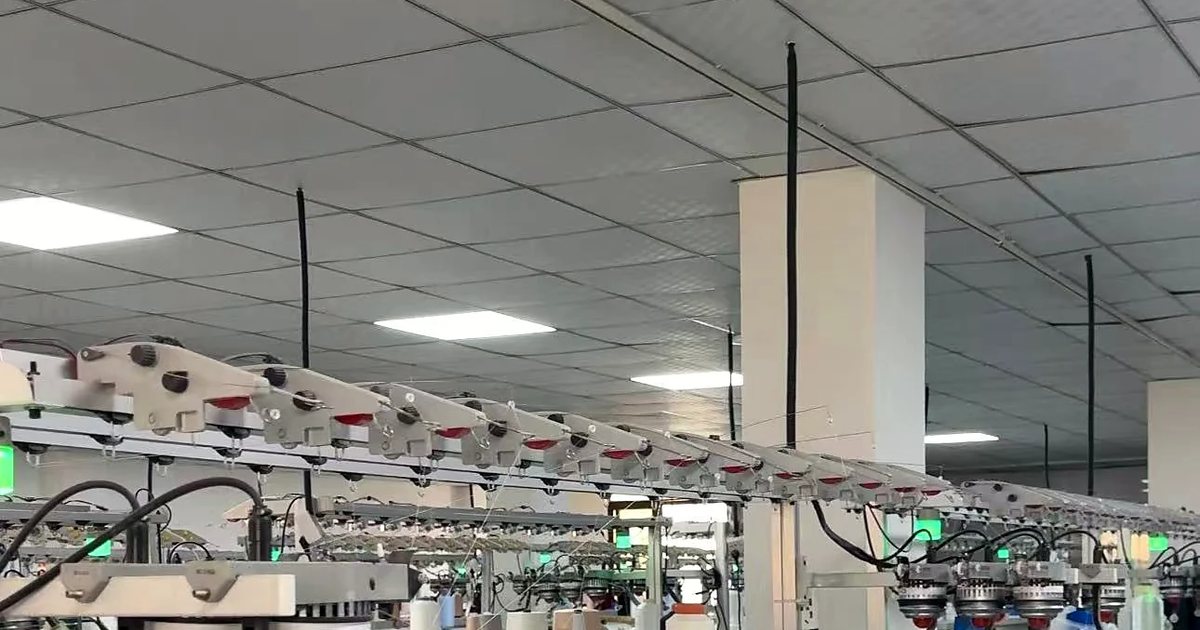
A photograph of a knitting room can help a buyer understand the environment behind a supplier's website. A close view of someone checking a seam can show what that activity looks like. Neither image tells the buyer which zipper was fitted to a particular jacket, what its measurements were, or whether that jacket passed an agreed test. The question is not whether the photograph is useful. It is which decision the photograph can support.
On this page · 4 sections
The Licheng knit outerwear manufacturing page uses a workshop and an equipment-room scene to illustrate the working environment, while the quality page distinguishes a general seam-review photograph from a video of one identified grey reference jacket. Those pages set different evidence boundaries. For your own sourcing brief, use the map below to ask what belongs to the factory, what belongs to an identified sample, and what still needs a project record.
Place each image at the right evidence level
Swipe sideways to read all columns →
| Material a buyer receives | Useful question it can inform | Question it cannot answer alone |
|---|---|---|
| Workshop, machine-room or showroom image | What does the environment or display look like in that image? | Which machine, setting, yarn or production lot made a particular style? |
| A person demonstrating a general inspection step | What action is visible, and where would a buyer ask for more detail? | Was the buyer's style inspected or accepted, and to which criteria? |
| Photograph or video tied to a named physical sample | What visible construction, placement or action can be observed on that sample? | Whether all colours, sizes and bulk units behave the same way. |
| Measurement, material or test record tied to a sample or lot | What values or findings were recorded under the stated method and conditions? | Any property outside that record's sample, scope, date or acceptance criteria. |
The last row is a document, not simply another polished picture. Even when a form is photographed, the buyer still needs to know what was measured, on which identified item, by whom, when and against which agreed requirement. If the information is absent, treat the image as a prompt for a question rather than a passed checkpoint.
Look at this process photo at its actual scope
The photograph below shows hands reviewing a seam on a blue knit garment. It helps a buyer see the kind of action meant by a seam review. The style identifier, sample revision, agreed criteria and recorded result are not visible. There is no zipper in this image. It therefore cannot establish that a particular zip-knit jacket, colour or production lot was checked.
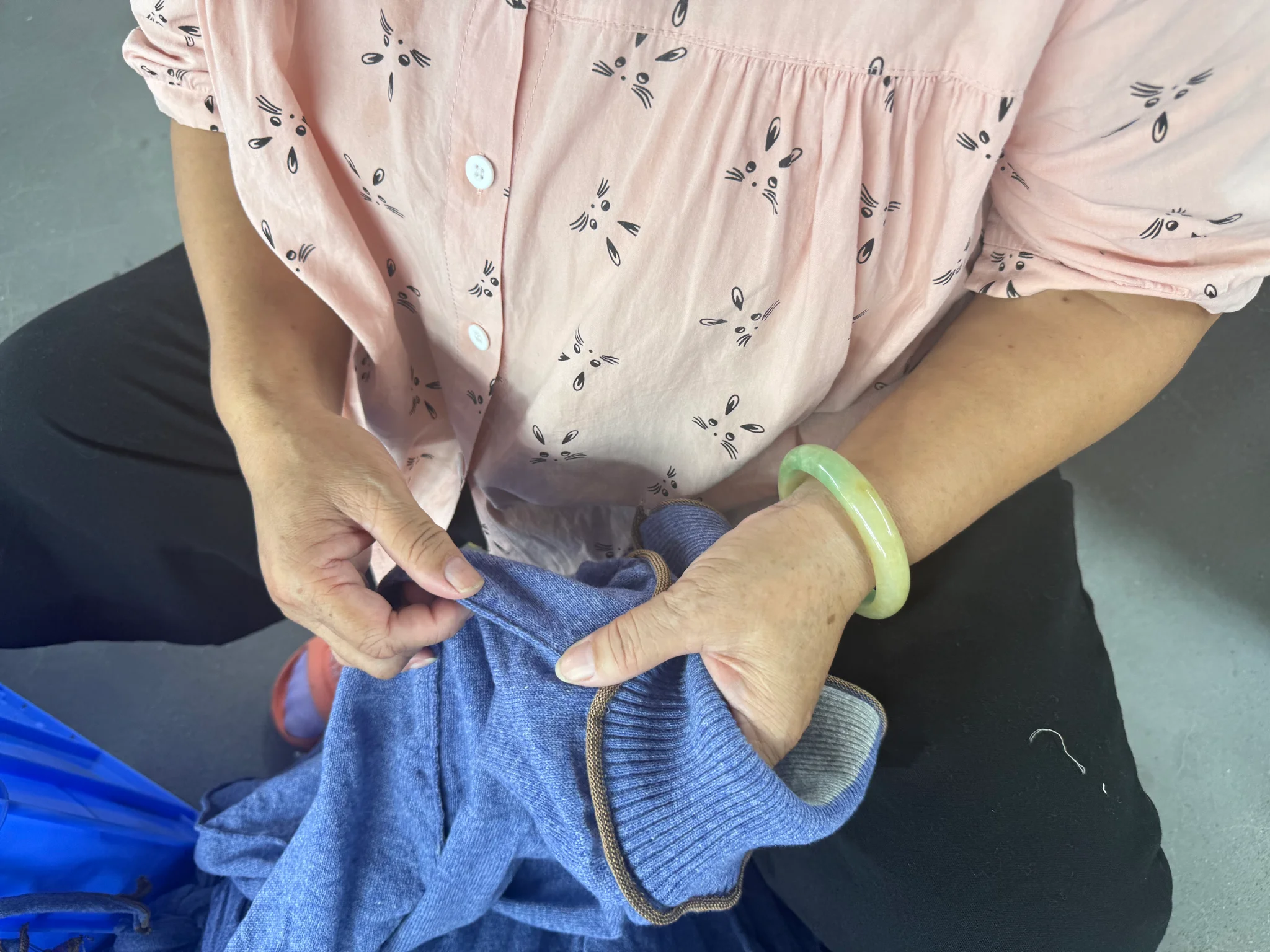
Use this view to ask how a seam would be reviewed on your identified sample. For an acceptance decision, request a revision-linked view or record, the agreed criteria and any result relevant to that item. Until those exist, keep the item open in the project brief rather than treating the general process photo as proof.
Ask what connects a picture to the garment being bought
Start with a style or project reference and the current sample revision. Request a front and back view of that identified sample, close views of the relevant front opening and seams, and the version of the written specification against which it is being reviewed. For a claim about a zipper's visible operation, ask for the actual sample and the complete action in a video. A factory tour may contain zips and jackets, but a clip of an unnamed garment cannot establish the nominated component or the outcome for your style.
For a measurement question, ask for the measurement points, garment condition, sample size, values and agreed tolerance in the record. A tape measure visible in a photograph is useful context; it is not a complete size report. For a material or performance claim, ask for the material or test document applicable to the actual yarn, colour, construction or lot. Company credentials and an image of a label do not automatically extend a certificate or test result to every reference product.
One style can also change between the image and the order. If a zipper, yarn, facing or size specification changes after the photograph was taken, request a new revision reference and decide which earlier evidence still applies. The buyer's question is specific: does this file relate to the version I am being asked to approve?
Make an evidence request that is proportionate
You do not need a full laboratory pack to ask about a pocket position. You do need more than a workshop photograph to approve a named pocket-zip construction. In the first exchange, send a short request with four fields:
- Decision: the detail you need to accept, such as the front-zip position on a base-size sample.
- Item: the style, sample revision, size and nominated material or trim reference.
- Evidence: the view, operation record, measurement sheet or project document that would answer the decision.
- Open points: what remains unverified and whether a physical sample or agreed test is needed before production approval.
For example, “Please show the lower zip connection and knitted hem on sample revision B, size M, in front and side views; identify the actual zipper reference and send the agreed garment measurements. We will review the physical sample before bulk approval.” This is a request template, not a report that a Licheng reference style has revision B or has passed those checks.
Where a real sample, employee or customer work appears in the proposed evidence, agree what may be shared with the review team or made public. Project files can be redacted or kept private; deleting a customer's name from a picture does not make its manufacturing results applicable to another style. The about page shows the wider company setting and explains that project-specific records are confirmed for each brief. That is the right starting point for a buyer: use factory context to identify questions, then request evidence connected to the actual garment and decision.
If you have a design or an existing sample to review, send the style reference and the checks you need. The available sample, records and review method are confirmed for the project.